
How Radiant Floor Heating Works
Radiant floor heating is a hydronic heating system that circulates warm water through a network of PEX tubing installed beneath your floor surface. A boiler heats the water to 80-120 degrees Fahrenheit -- much lower than the 140-180 degrees used in radiator systems -- and circulation pumps distribute it through loops of tubing embedded in or under the floor. As the warm water flows through the tubing, heat radiates upward through the floor surface, warming objects and people in the room from the ground up.
The system works through radiant heat transfer rather than convection. Instead of blowing warm air that rises to the ceiling and creates temperature stratification, radiant floors deliver heat directly where you feel it -- at floor level and in the lower portion of the room where you live and work. The result is remarkably even warmth with no cold spots, no drafts, and no noise.
A manifold distributes water from the boiler to individual heating loops, each serving a specific zone of your home. Zone valves and thermostats control each loop independently, allowing you to set different temperatures for different rooms. The boiler, manifold, circulation pumps, and zone controls work together as an integrated system to deliver precise, comfortable heat to every area of your home.
Benefits of Radiant Floor Heating
Comfort Advantages
- Even warmth from floor to ceiling
- No cold spots or drafts
- Completely silent operation
- Warm floors to walk on barefoot
- No dry, blown air
- Zone control for every room
Efficiency & Health
- 20-40% more efficient than forced air
- No allergen or dust circulation
- Lower thermostat settings feel warmer
- No ductwork heat loss
- 50+ year tubing lifespan
- Invisible -- no vents, radiators, or baseboards
Radiant floor heating is particularly well-suited to Wyoming's cold climate. Because heat rises from the floor, the warmest air is at the level where you sit and stand, not at the ceiling where it is wasted. Many homeowners report feeling comfortable at thermostat settings 2-4 degrees lower than with forced air, translating to meaningful energy savings over a six to seven month heating season.
For allergy sufferers, radiant heat is a significant improvement over forced air. Without a blower pushing air through ducts, there is no circulation of dust, pet dander, pollen, or other allergens. The air in your home stays cleaner and less dry, improving indoor air quality and respiratory comfort.
Ideal for Wyoming's Cold Climate
Radiant floor heating is one of the most effective heating methods for cold climates like the Big Horn Basin. When outdoor temperatures drop to -20 or -30 degrees, a radiant floor system maintains consistent, comfortable warmth throughout your home without the temperature swings and cold spots common with forced-air heating.
The thermal mass of a concrete slab with embedded radiant tubing acts as a heat battery, storing warmth and releasing it gradually. This thermal mass effect smooths out temperature fluctuations and keeps your home comfortable even during the coldest Wyoming nights. Once the slab is warm, it takes very little energy to maintain the temperature, making the system remarkably efficient during extended cold snaps.
Radiant floor heating also eliminates one of the most uncomfortable aspects of Wyoming winters -- cold floors. Walking across a cold tile or wood floor in bare feet on a January morning is miserable. With radiant heating, your floors are consistently warm and inviting, transforming the feel of your entire home during the long heating season.
New Construction vs. Retrofit
New Construction
New construction is the ideal time to install radiant floor heating. PEX tubing is laid out on top of insulation before the concrete slab is poured, embedding the tubing directly in the floor. This method provides the best thermal performance and the lowest installation cost per square foot. We work with builders throughout the Big Horn Basin to design and install radiant systems during the construction phase.
Retrofit Installation
Installing radiant floor heating in an existing home is possible, though the approach depends on your home's construction. Common retrofit methods include thin-slab overpours (adding a 1.5-inch concrete layer over existing floors), staple-up installation (attaching tubing to the underside of the subfloor from the basement or crawl space), and aluminum heat transfer plate systems that improve heat transfer in staple-up applications. We evaluate each home individually and recommend the most practical and cost-effective approach.
Best Flooring for Radiant Heat
The flooring material you choose affects how well radiant heat transfers into the room. Some materials conduct heat excellently, while others insulate the floor from the heat below.
- Tile and stone: The best conductors. Ceramic tile, porcelain, and natural stone transfer heat efficiently and feel wonderfully warm underfoot. Ideal for bathrooms, kitchens, and entryways.
- Polished concrete: Excellent heat transfer and the simplest installation since the tubing is already in the slab. Popular in modern homes, basements, and garages.
- Engineered hardwood: Good performance with radiant heat. The layered construction is more stable than solid wood and handles temperature changes without warping.
- Laminate and luxury vinyl: Most products are compatible with radiant heat. Check manufacturer specifications for maximum floor temperature ratings.
- Carpet: The least effective option. Thick carpet with heavy padding acts as insulation, blocking heat transfer. If carpet is desired, use thin carpet with minimal padding.
Pairing with Navien Boilers & Zone Control
We pair our radiant floor installations with Navien boilers and Taco zone controllers for optimal performance. Navien's condensing boilers are particularly well-suited to radiant floor heating because they achieve their highest efficiency when operating at the low water temperatures (80-120 degrees) that radiant systems use.
Taco zone controllers manage independent heating loops, allowing different temperatures in each room or area. A typical configuration might include separate zones for the master suite, living areas, kitchen, guest bedrooms, basement, and garage. Each zone has its own thermostat, so you heat only the spaces you are using to the temperature you want.
For larger homes, we design multi-loop manifold systems that distribute water evenly to all areas. Proper loop design -- including tube spacing, loop length, and flow balancing -- is critical to even heat distribution. Our experience with hundreds of radiant installations ensures your system is designed and installed for optimal performance.
Rooms Where Radiant Heating Excels
Bathrooms
Warm tile floors in the bathroom are one of life's small luxuries, especially during Wyoming winters. Radiant heat in bathrooms eliminates the shock of stepping onto cold tile and keeps towels warm on heated towel bars.
Basements
Basements are naturally cold because they are surrounded by earth. Radiant floor heating transforms a basement from a cold, uninviting space into comfortable living area. The slab-on-grade construction of most basements is ideal for embedded radiant tubing.
Garages and Shops
Heated garage and shop floors are popular in Wyoming, where residents use their outbuildings year-round. Radiant heat in a garage or shop eliminates the need for overhead heaters and keeps the entire floor warm and dry -- ideal for vehicle maintenance, woodworking, or any other activity.
Whole-House Systems
Many of our clients choose radiant floor heating for their entire home. A whole-house radiant system provides the most consistent, comfortable, and efficient heating available for Wyoming's climate. Combined with a high-efficiency Navien boiler and zone control, whole-house radiant is the premium heating solution.
Radiant Floor Heating Installations
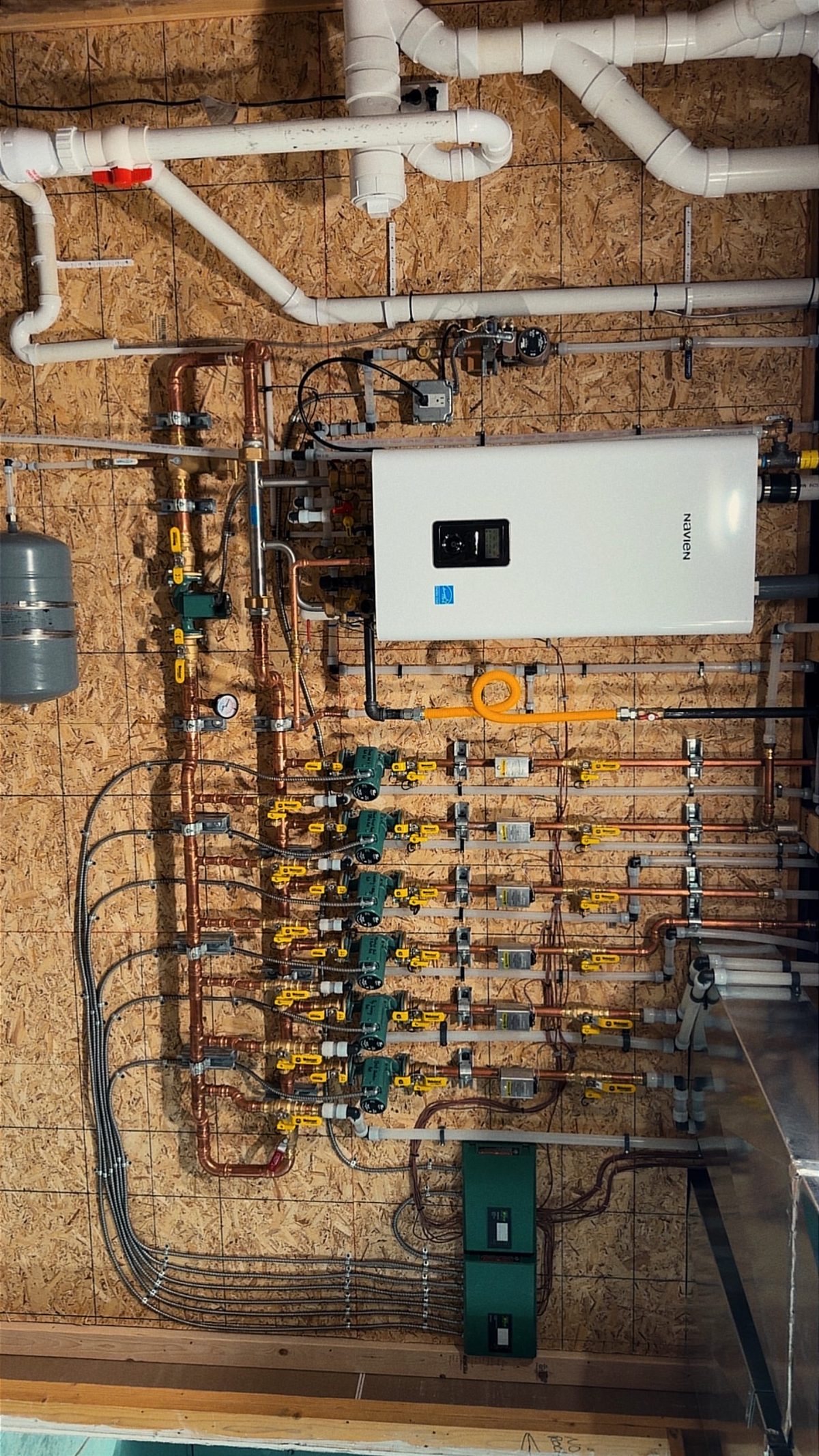
Navien boiler with radiant floor manifold and zone controls
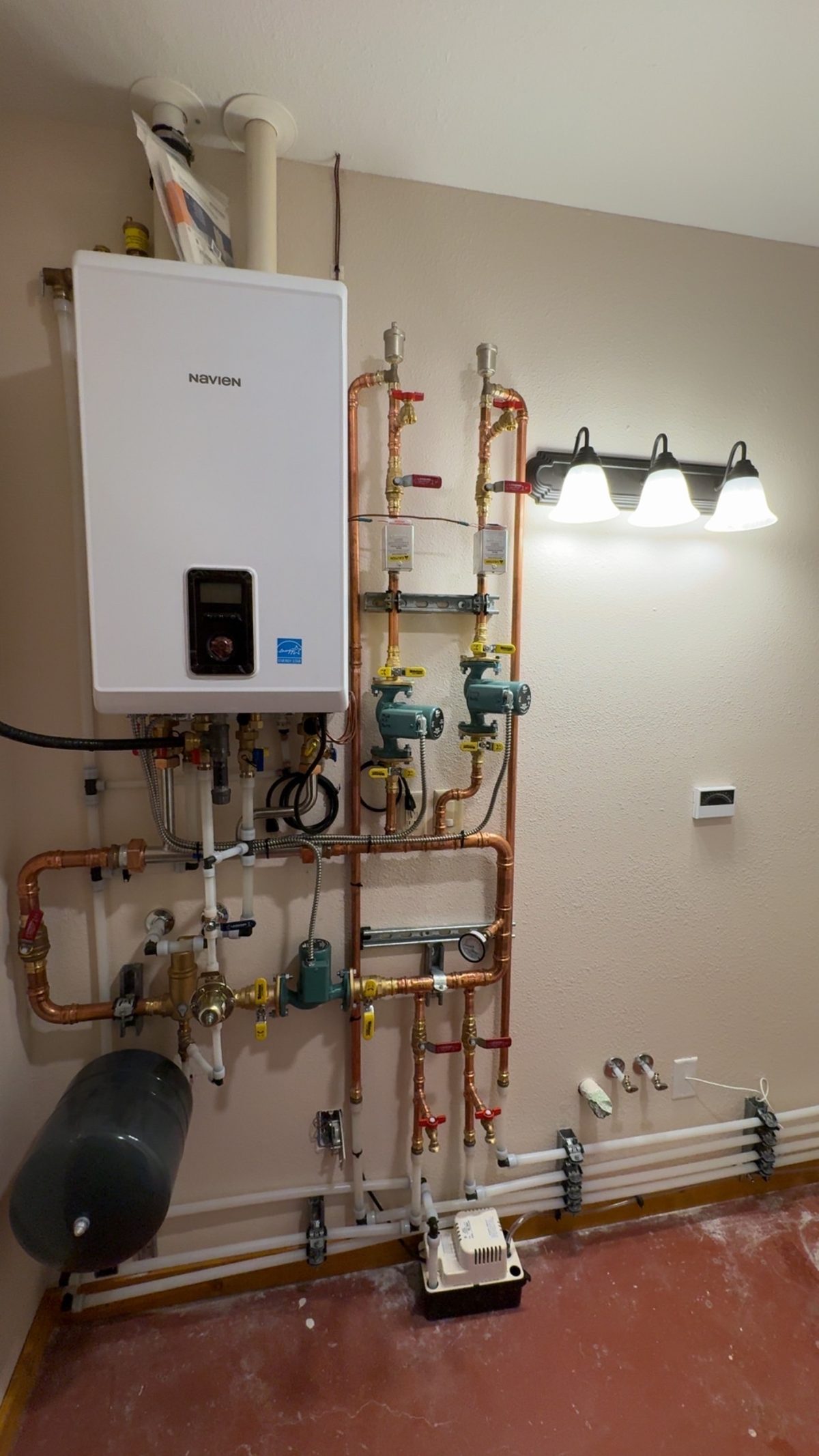
Navien boiler feeding multi-zone radiant floor manifold
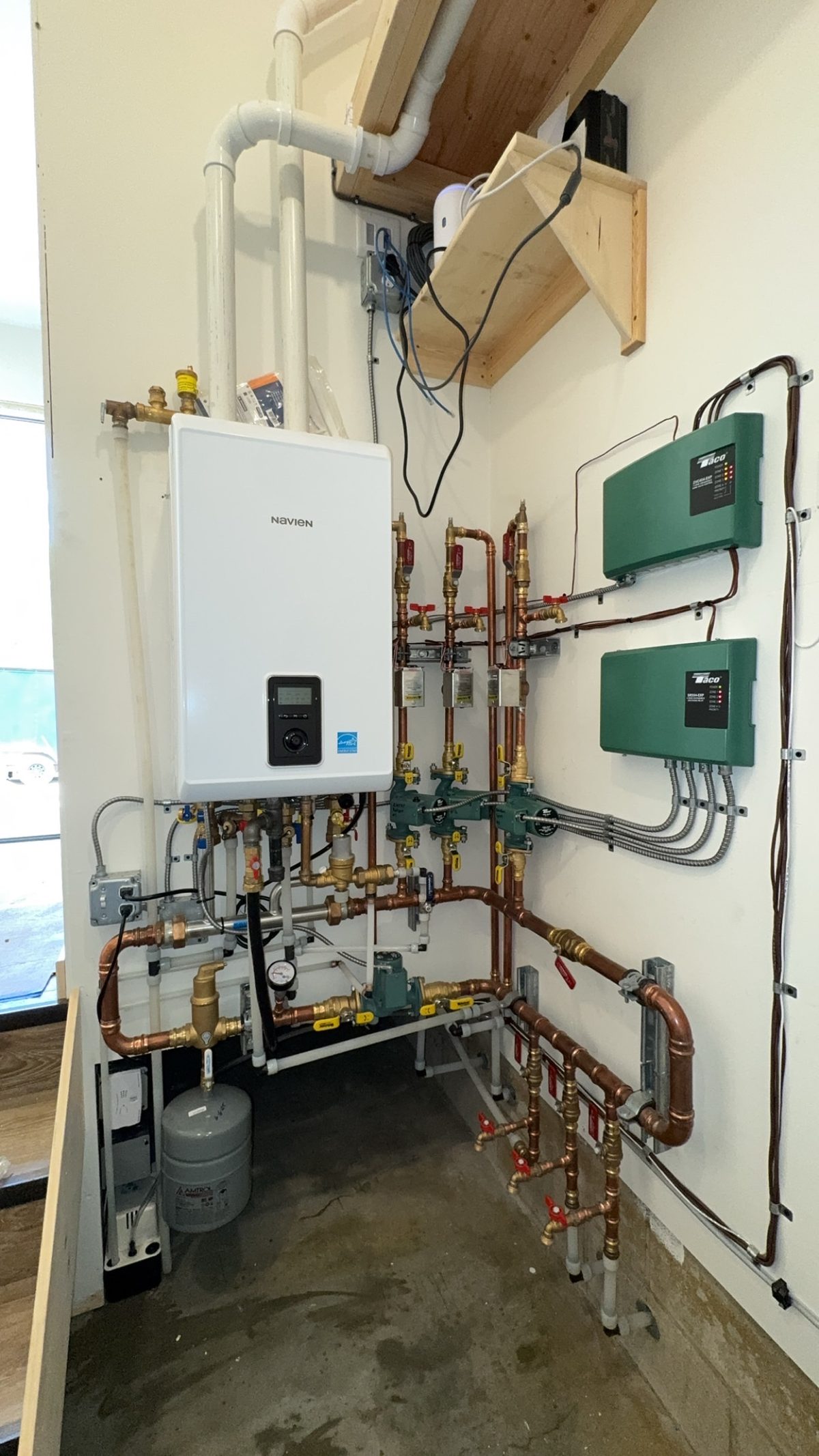
Taco zone controllers for independent room temperature management
Radiant Floor Heating FAQs
Radiant floor heating in Cody typically costs $6-$12 per square foot for the tubing and installation, plus the cost of a boiler system ($5,000-$10,000). Total system cost for a 2,000 sq ft home ranges from $17,000-$34,000. While the upfront cost is higher than forced air, radiant heat is more efficient and comfortable, and operating costs are often lower over the system's 30+ year lifespan.
Yes, though it is easier and less expensive in new construction. Retrofit options include installing tubing in thin-slab overpours, stapling tubing under existing floors from below (if accessible), or using aluminum heat transfer plates between floor joists. We evaluate each situation and recommend the most practical method.
Tile, stone, and polished concrete are the best conductors and work excellently with radiant heat. Engineered hardwood and laminate also perform well. Solid hardwood can work but requires careful temperature limits. Thick carpet with heavy padding is the least effective because it insulates the floor from the heat below.
Absolutely. Radiant floor heating is one of the most efficient heating methods for cold climates. It heats objects and people directly rather than just air, so you feel comfortable at lower thermostat settings. When paired with a condensing boiler, overall efficiency is excellent even in Wyoming's extreme cold.
The PEX tubing used in hydronic radiant floor systems has a projected lifespan of 50+ years. The tubing is buried in or under the floor and has no moving parts. The boiler that powers the system typically lasts 15-20 years, meaning you may replace the boiler once or twice over the life of the radiant floor system itself.
Related Services
Boiler Services
Navien boiler installation, repair, and maintenance -- the heart of radiant systems.
Learn More